Free trading education
Build the brain before the strategy.
Clear, risk-first explanations for serious beginners learning how to trade with more structure and less noise.
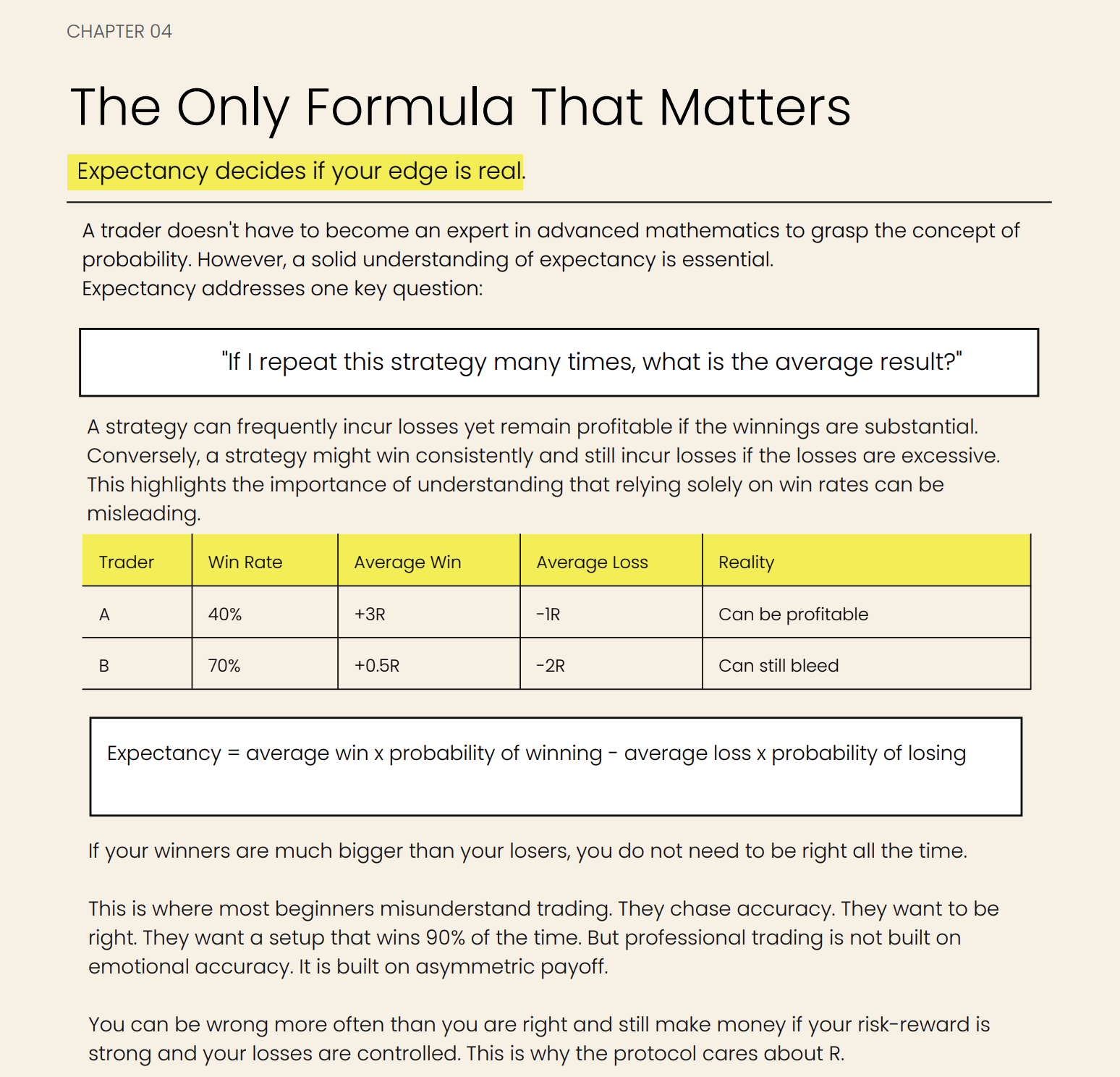
Trading Expectancy Explained: Why 40% Can Beat 70%
Learn the trading expectancy formula and why win rate alone can mislead beginners.
Read guide →02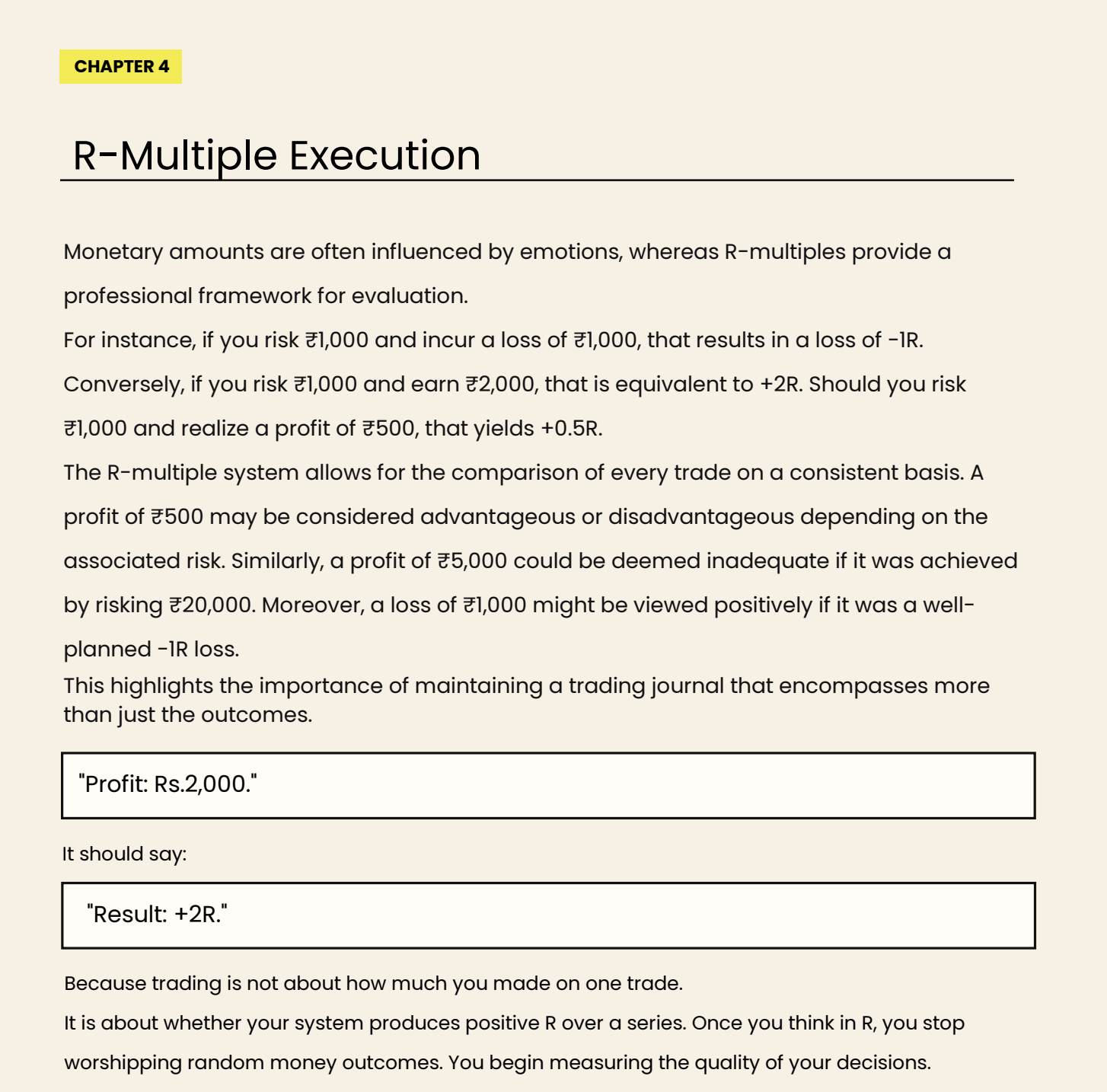
What Is R in Trading? R-Multiple Explained
Understand R-multiples, initial risk, and how traders compare results consistently.
Read guide →03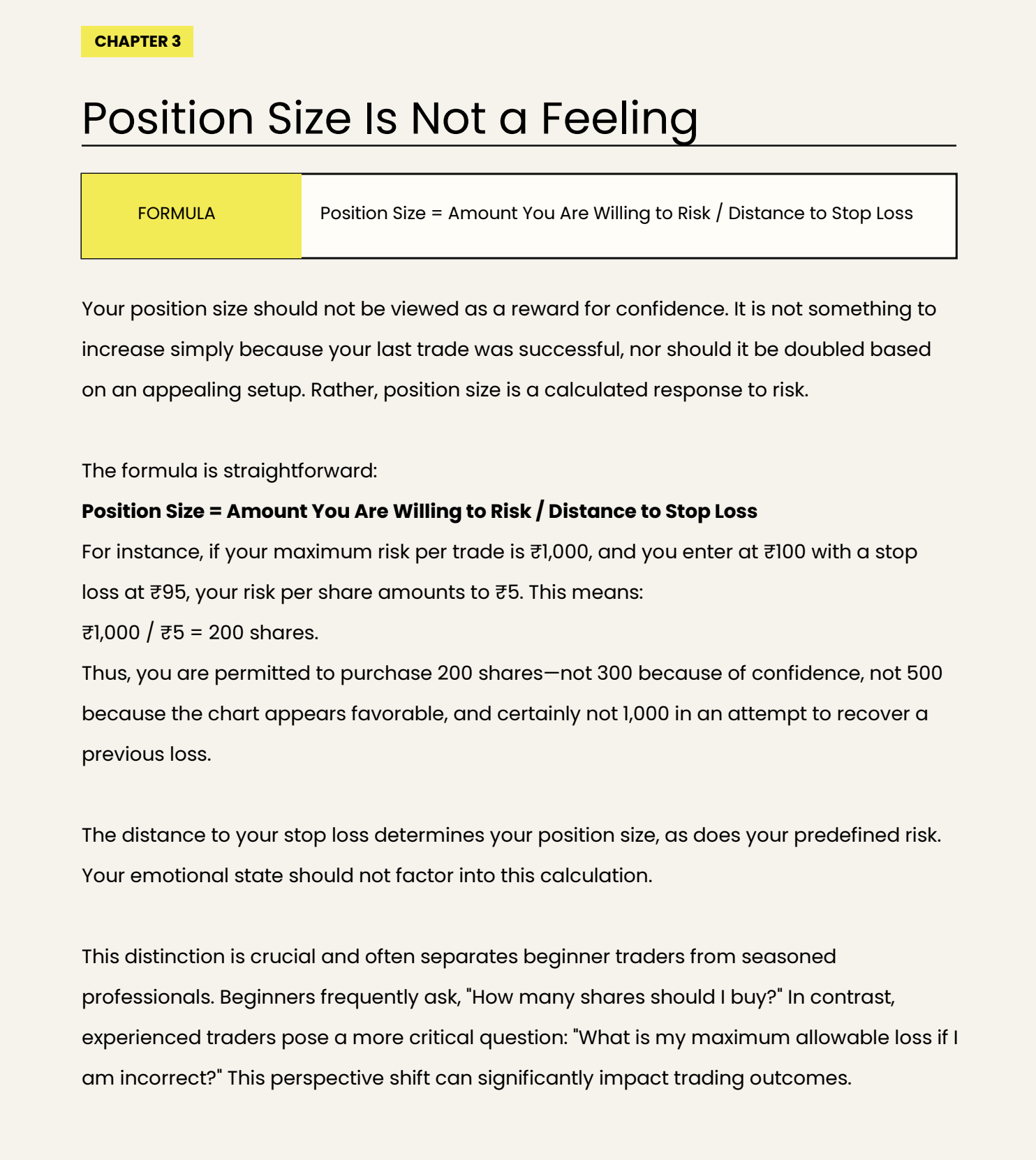
How to Calculate Position Size in Trading
Use a simple risk-first position size formula instead of sizing from confidence.
Read guide →04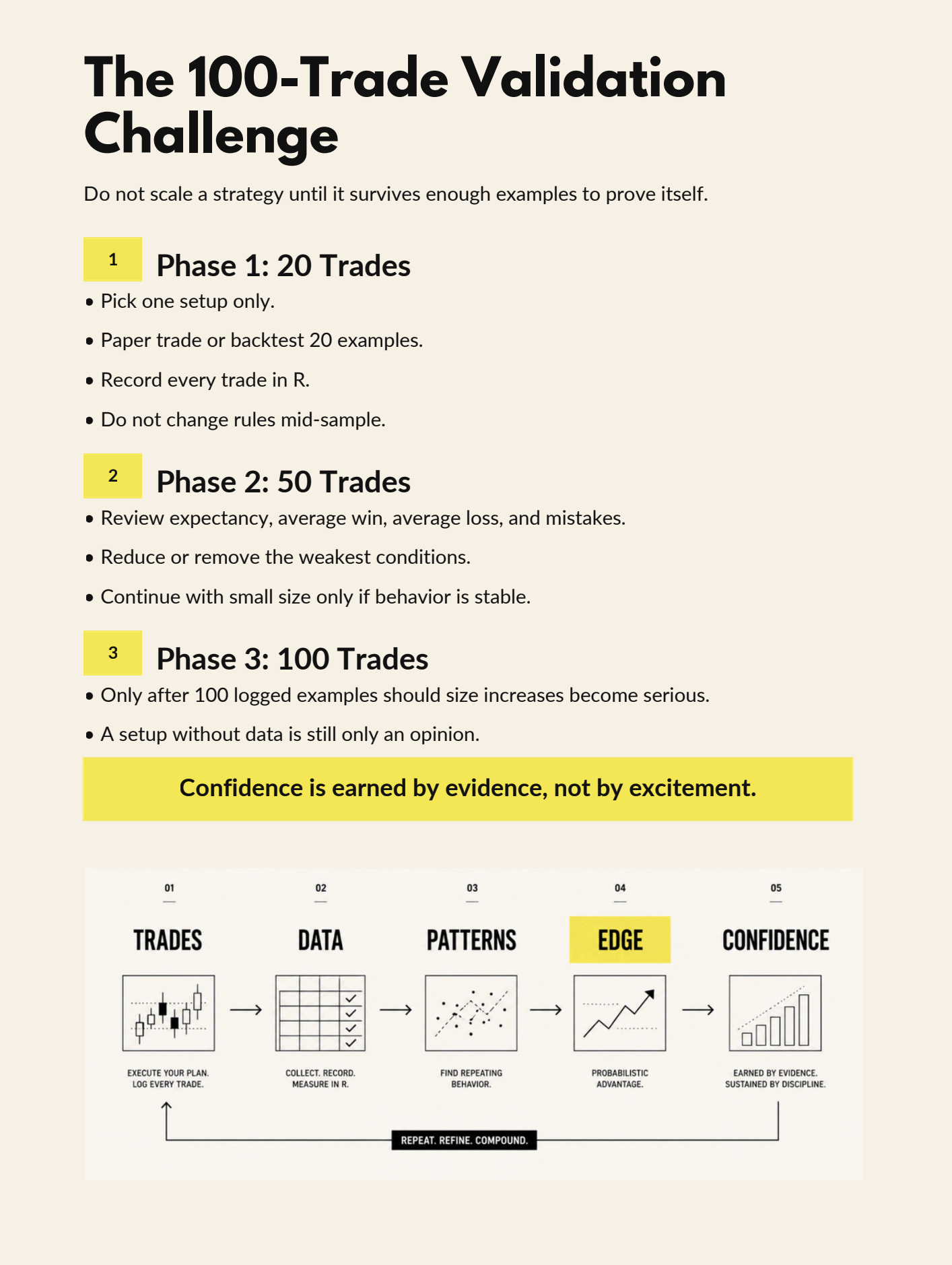
How Many Trades Do You Need to Test a Strategy?
Learn why small samples mislead and how to validate a trading strategy with consistent data.
Read guide →05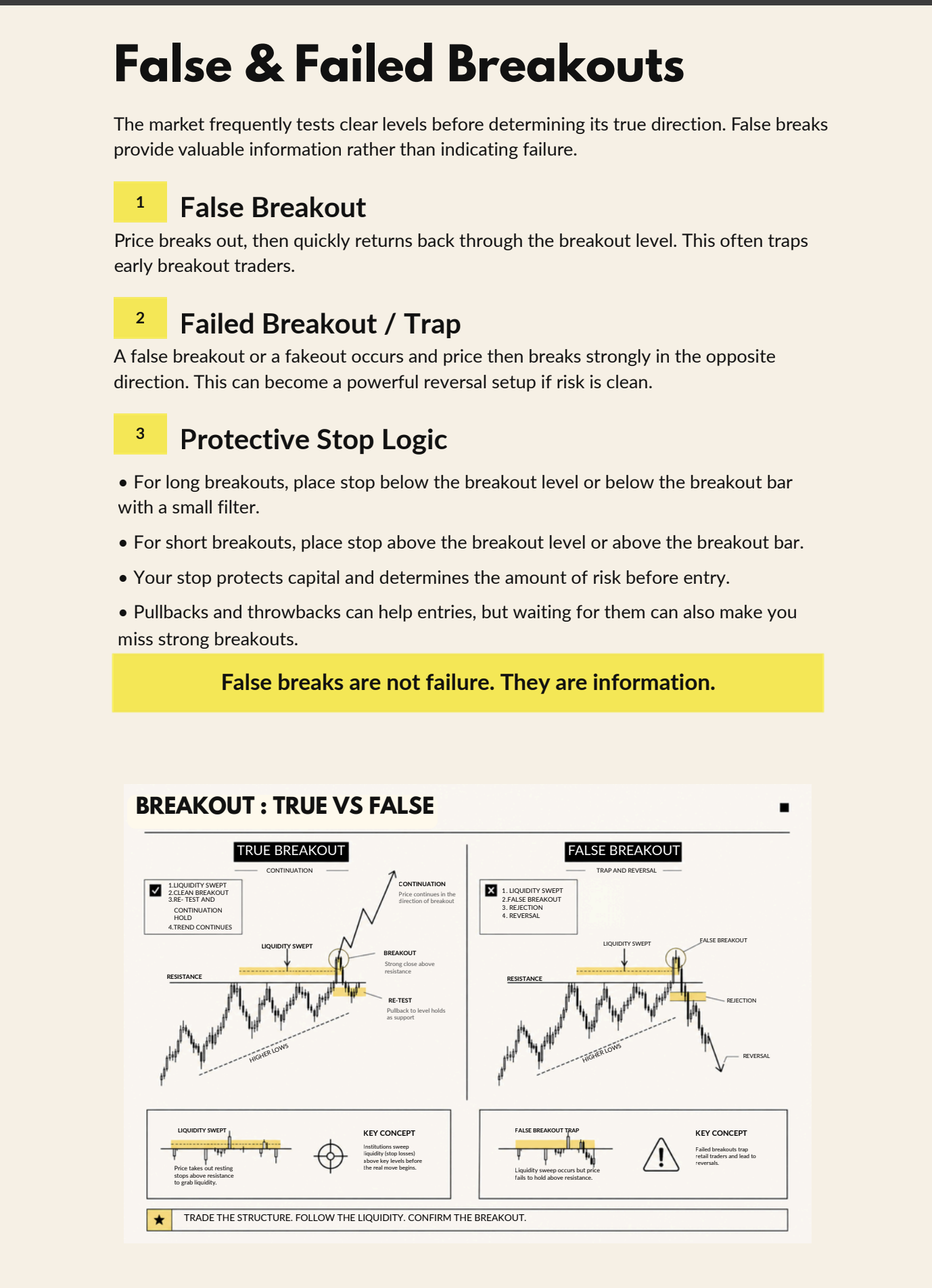
Liquidity Sweep vs Breakout: What’s the Difference?
Learn how acceptance, failure, and reclaim distinguish a liquidity sweep from a breakout.
Read guide →06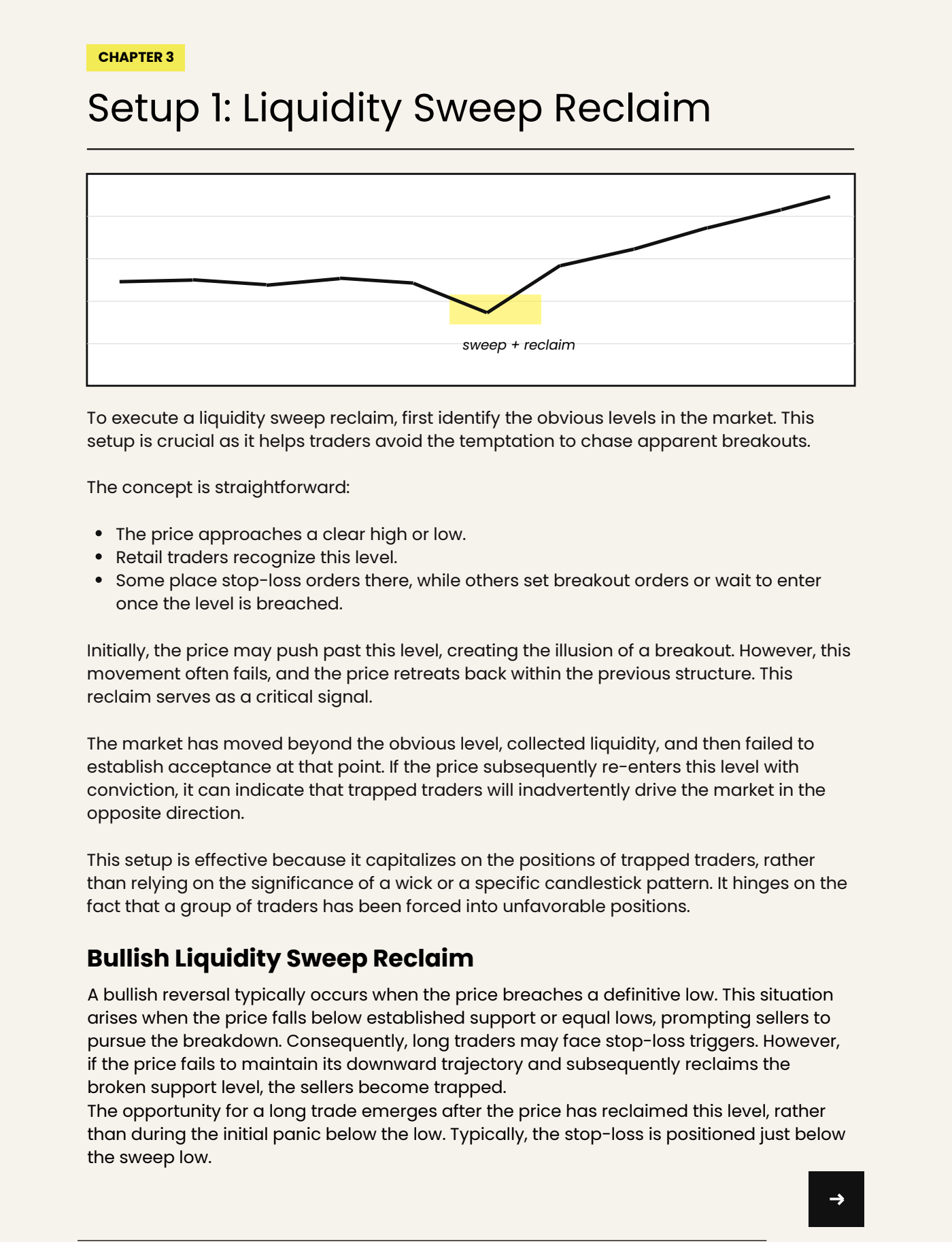
What Is a Liquidity Sweep Reclaim?
Understand the sweep, failure, and reclaim sequence before considering a structured reaction.
Read guide →07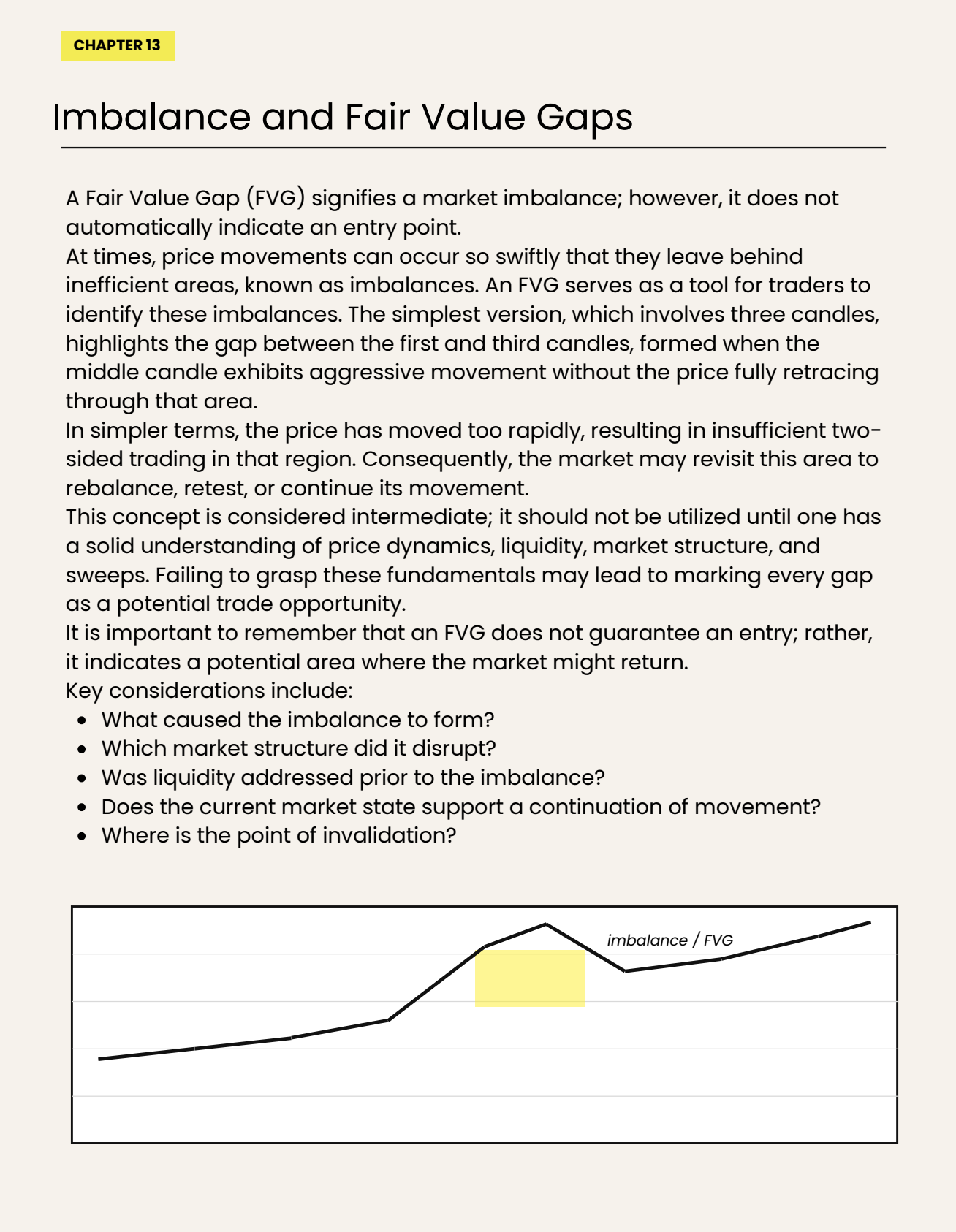
BOS vs MSS: What’s the Difference?
A beginner-friendly explanation of Break of Structure and Market Structure Shift.
Read guide →08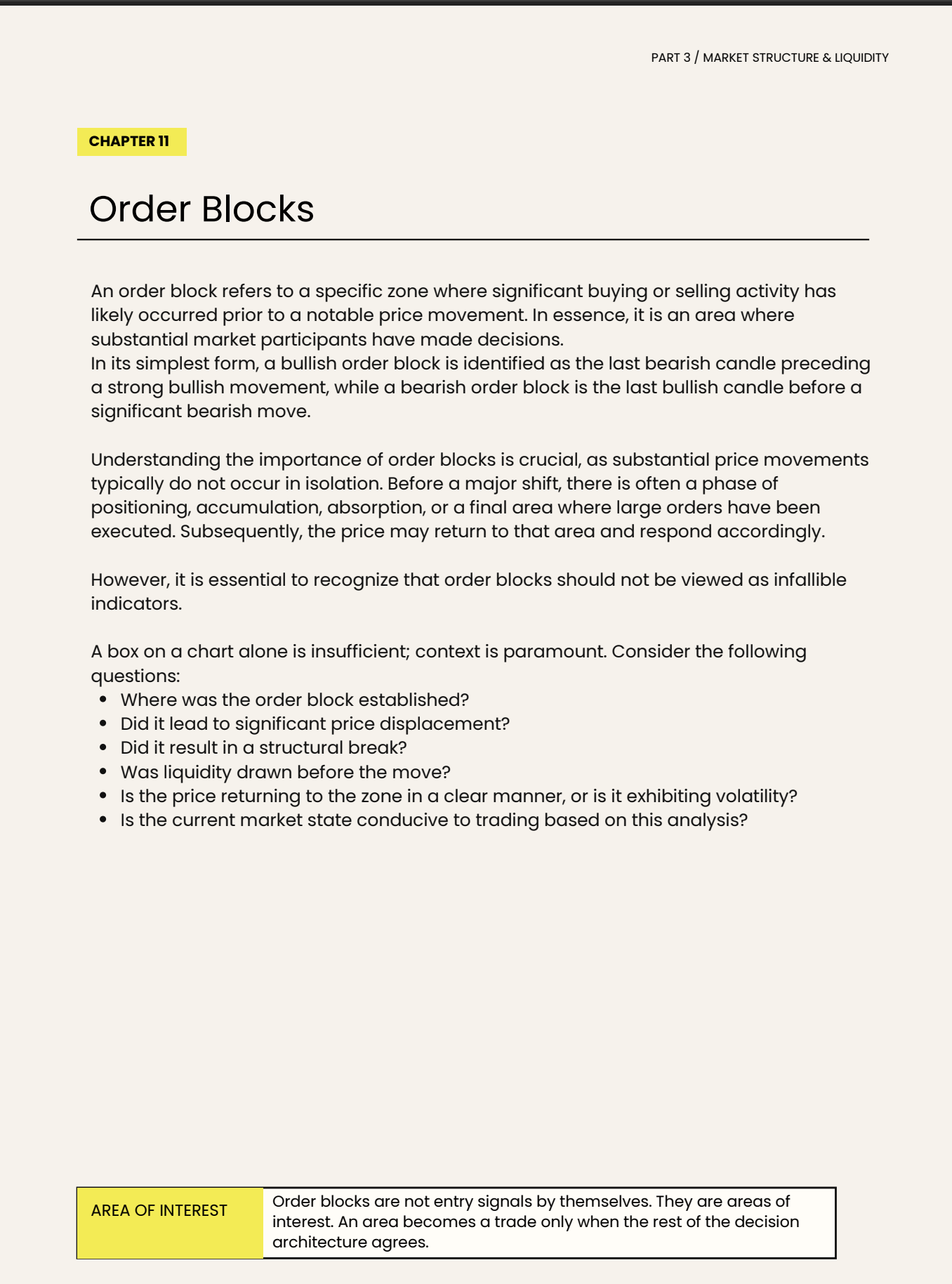
Fair Value Gap Explained for Beginners
Learn what an FVG is and why a gap alone is not an entry signal.
Read guide →09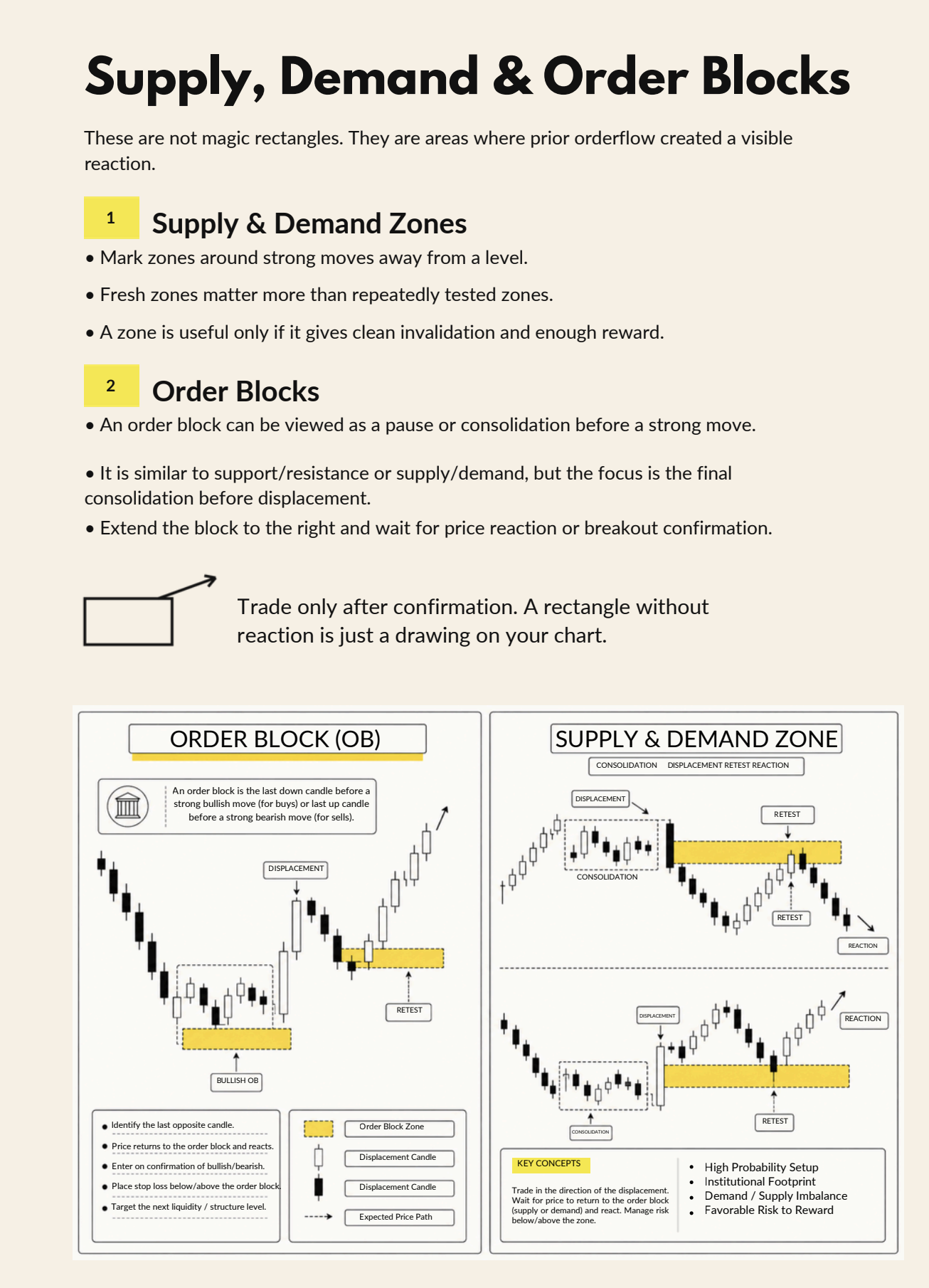
Why Most Order Blocks Fail
Learn why order blocks need displacement, structure, liquidity, and reaction to matter.
Read guide →10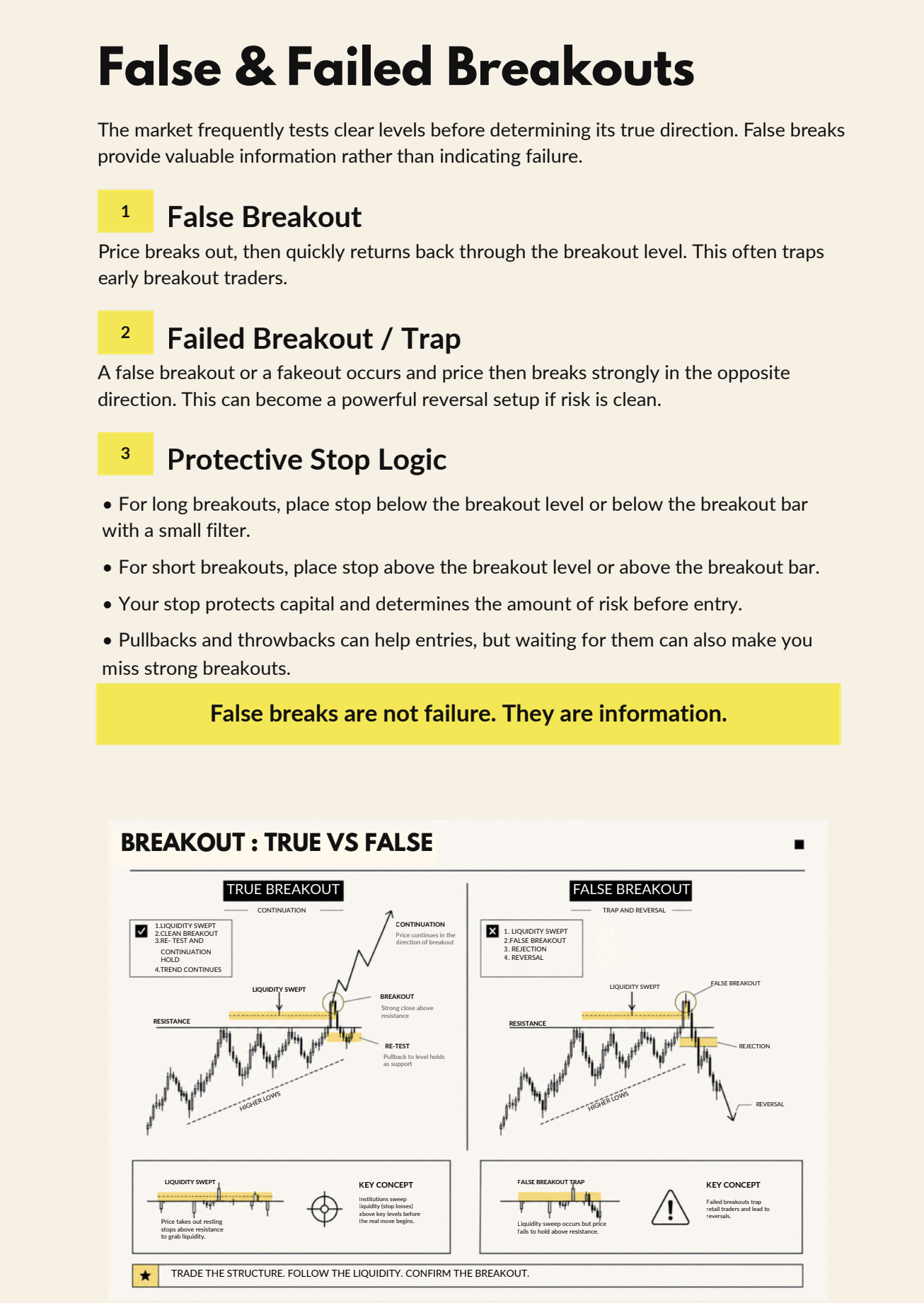
Order Block vs Supply and Demand
Compare order blocks and supply-and-demand zones without treating either as magic rectangles.
Read guide →11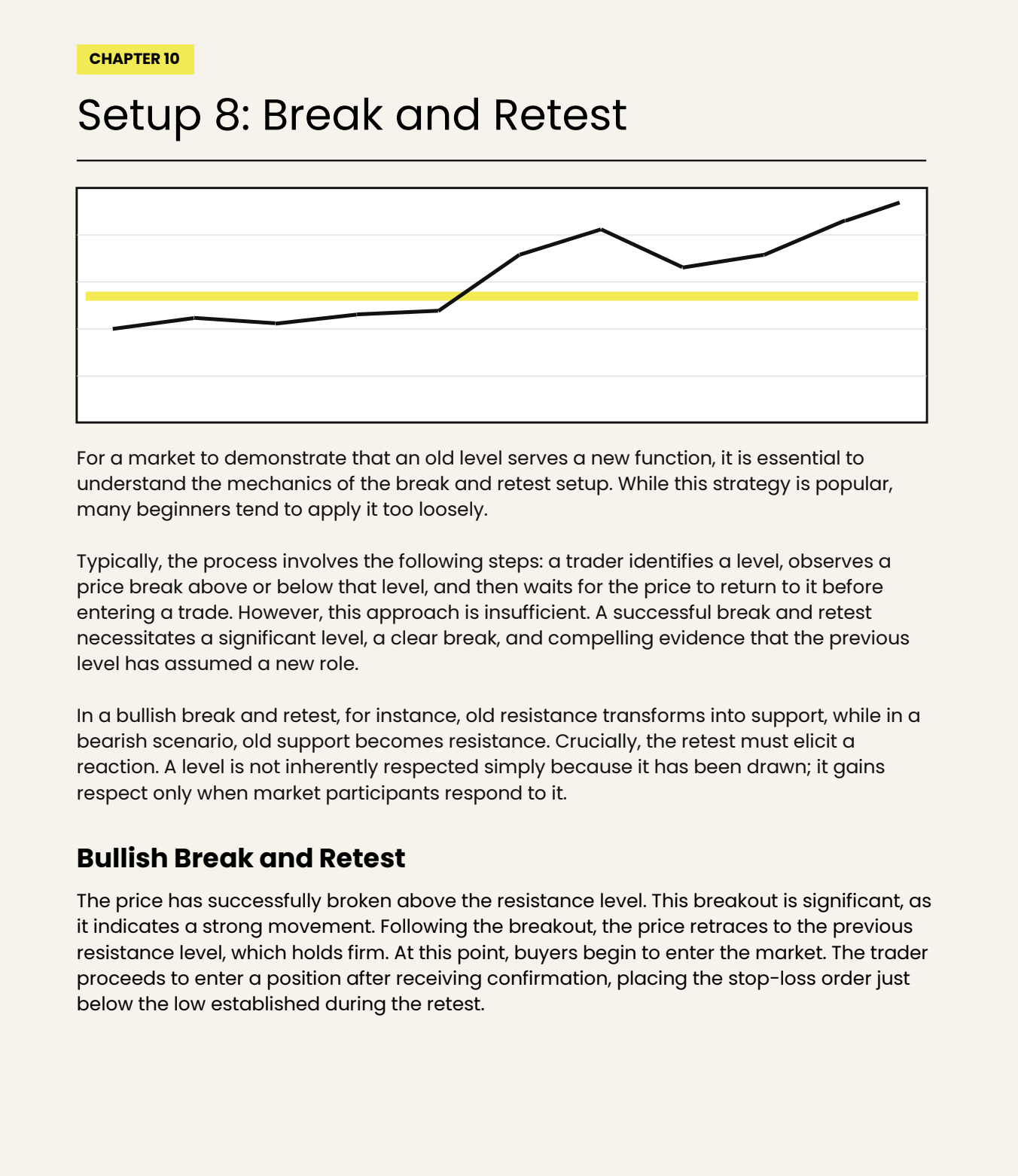
True Breakout vs False Breakout
Learn to look for acceptance and retests instead of chasing the first move through resistance.
Read guide →12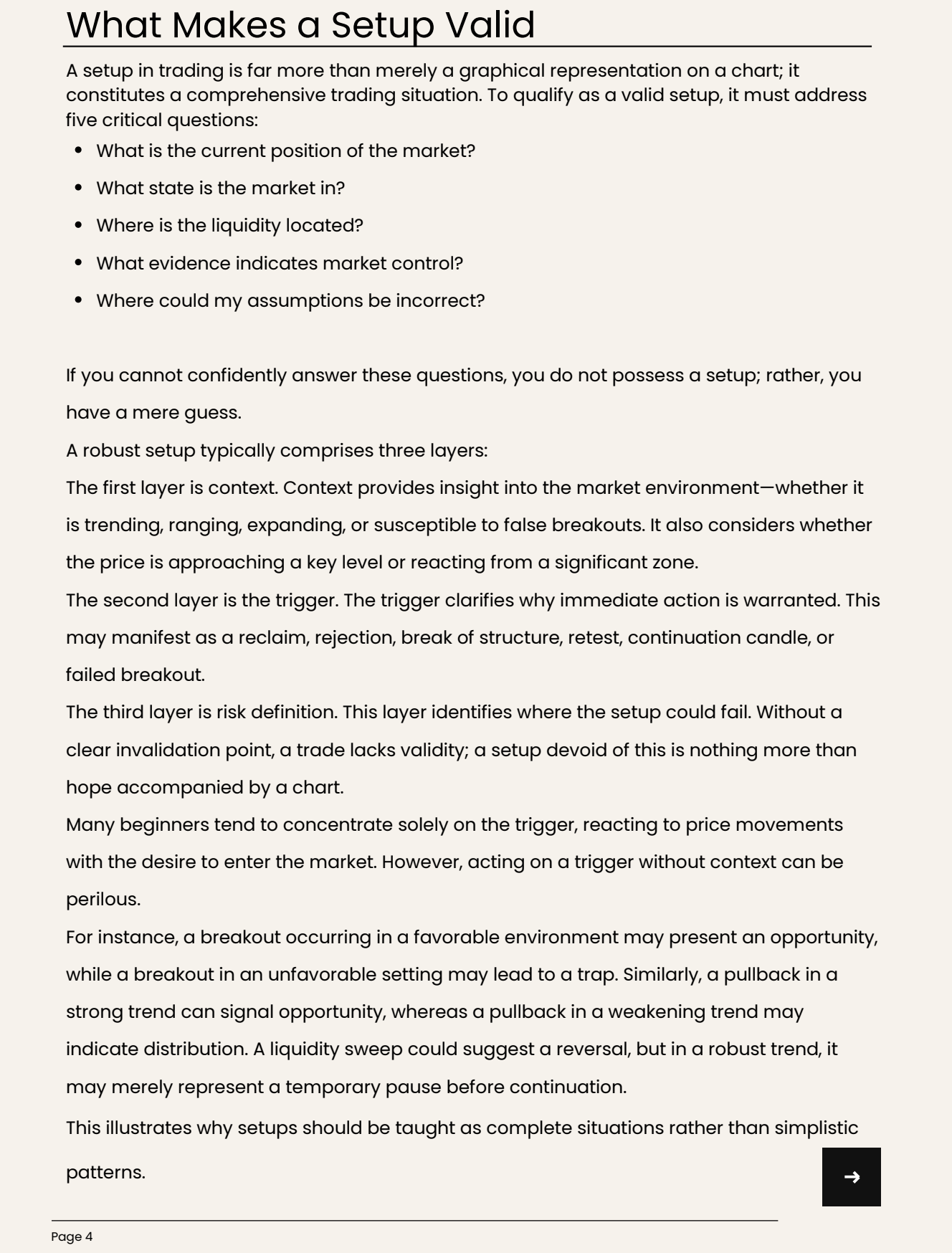
Break and Retest Strategy Explained
Understand why a retest needs a reaction and not just a touch of a drawn line.
Read guide →13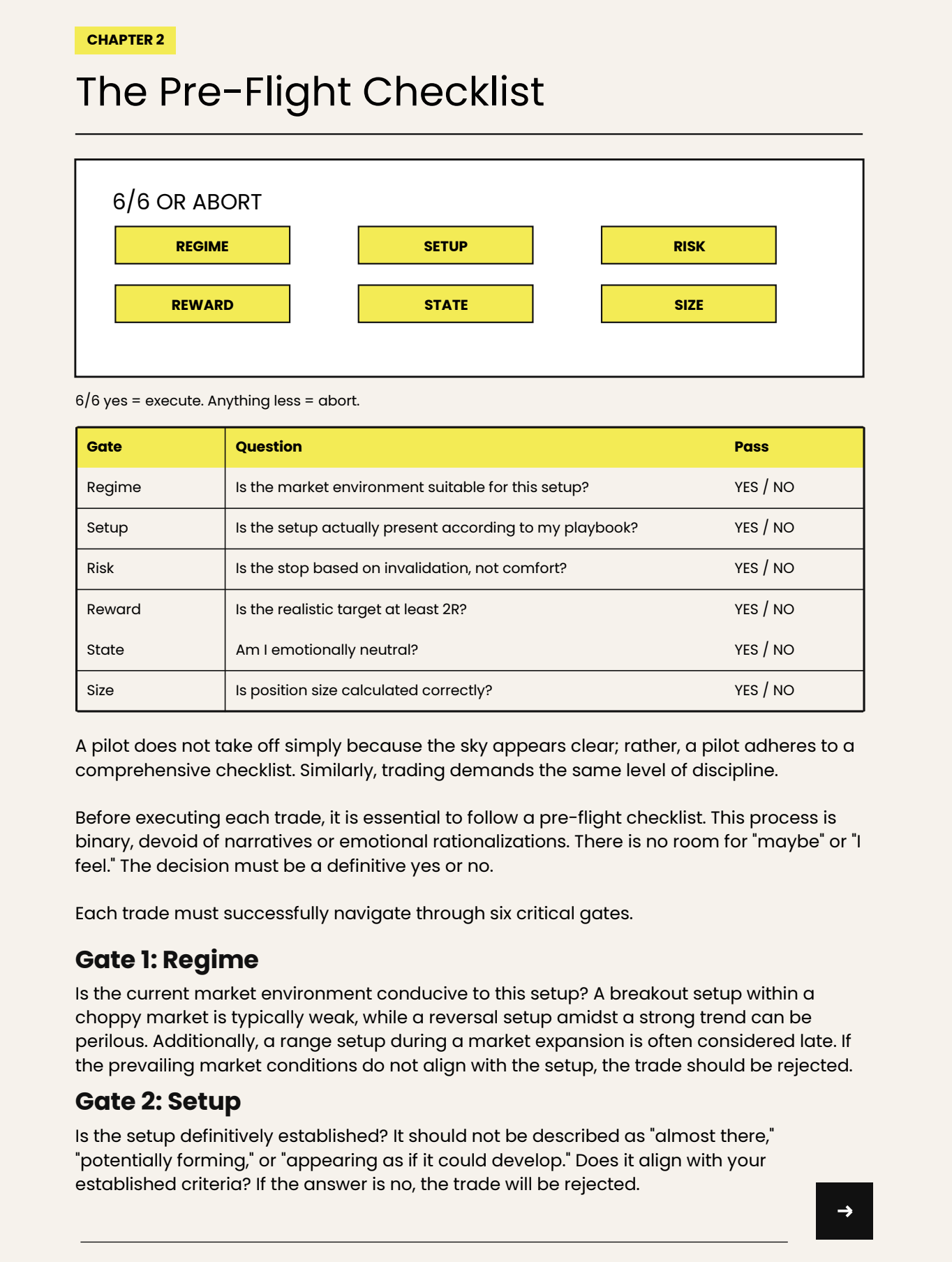
What Makes a High-Probability Trading Setup?
Build higher-quality trading setups from context, trigger, and invalidation.
Read guide →14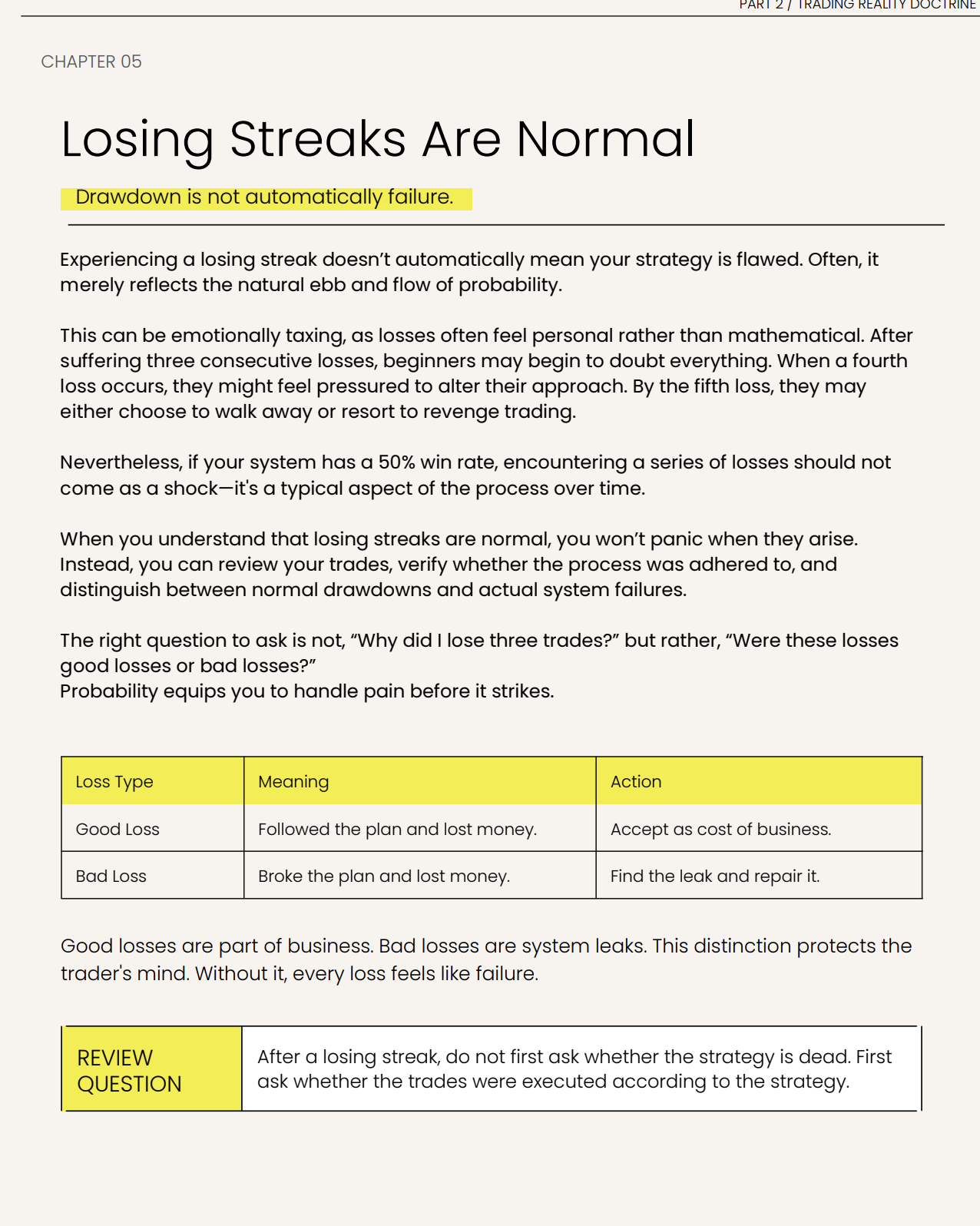
Pre-Trade Checklist: 6 Things to Check Before Entry
Use a six-part pre-trade checklist to slow down emotional entries.
Read guide →15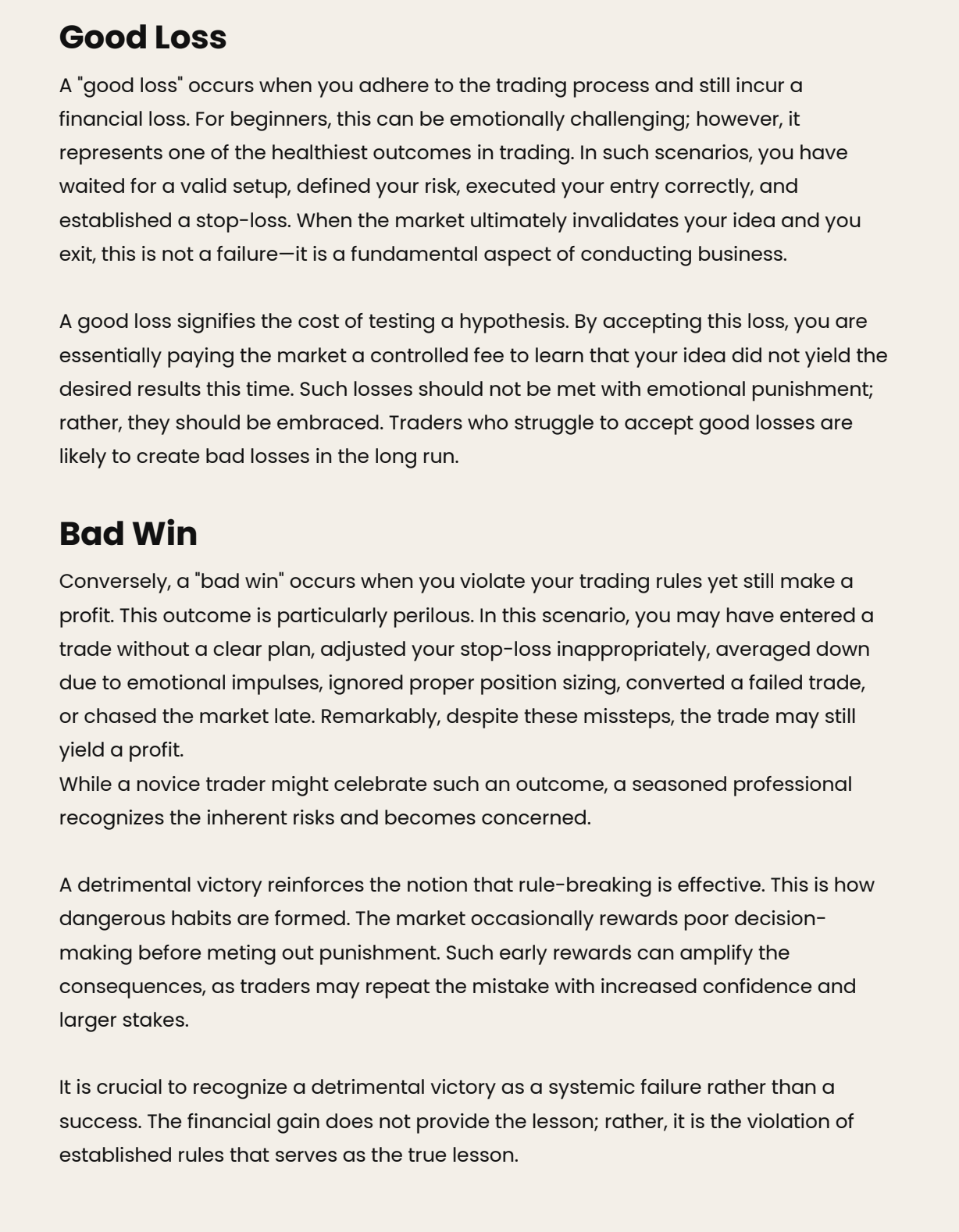
Good Loss vs Bad Loss in Trading
Learn why a planned loss can be good execution and an unplanned win can be dangerous.
Read guide →16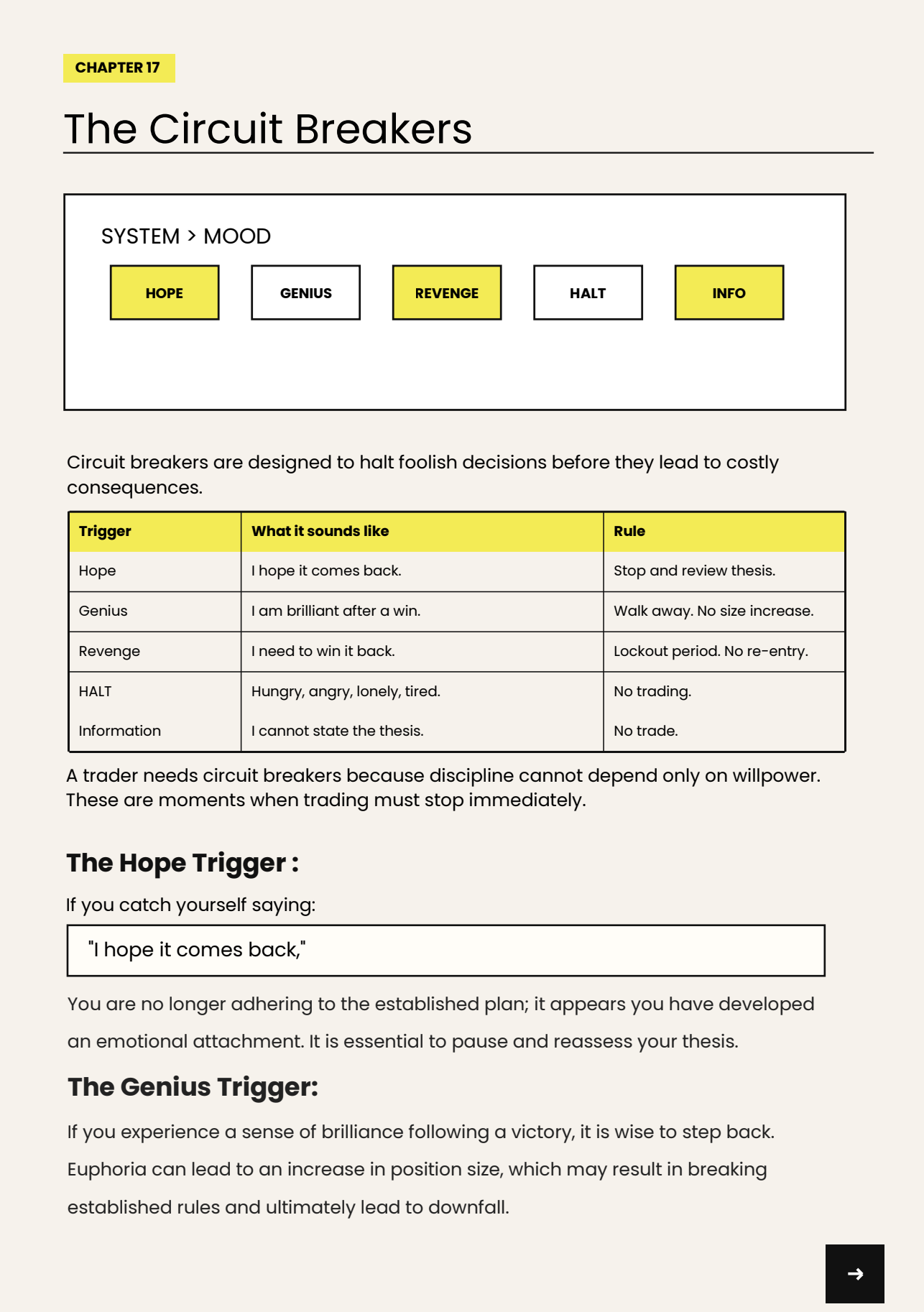
Why a Bad Win Can Be More Dangerous Than a Loss
Understand how profitable rule-breaking can train destructive trading habits.
Read guide →17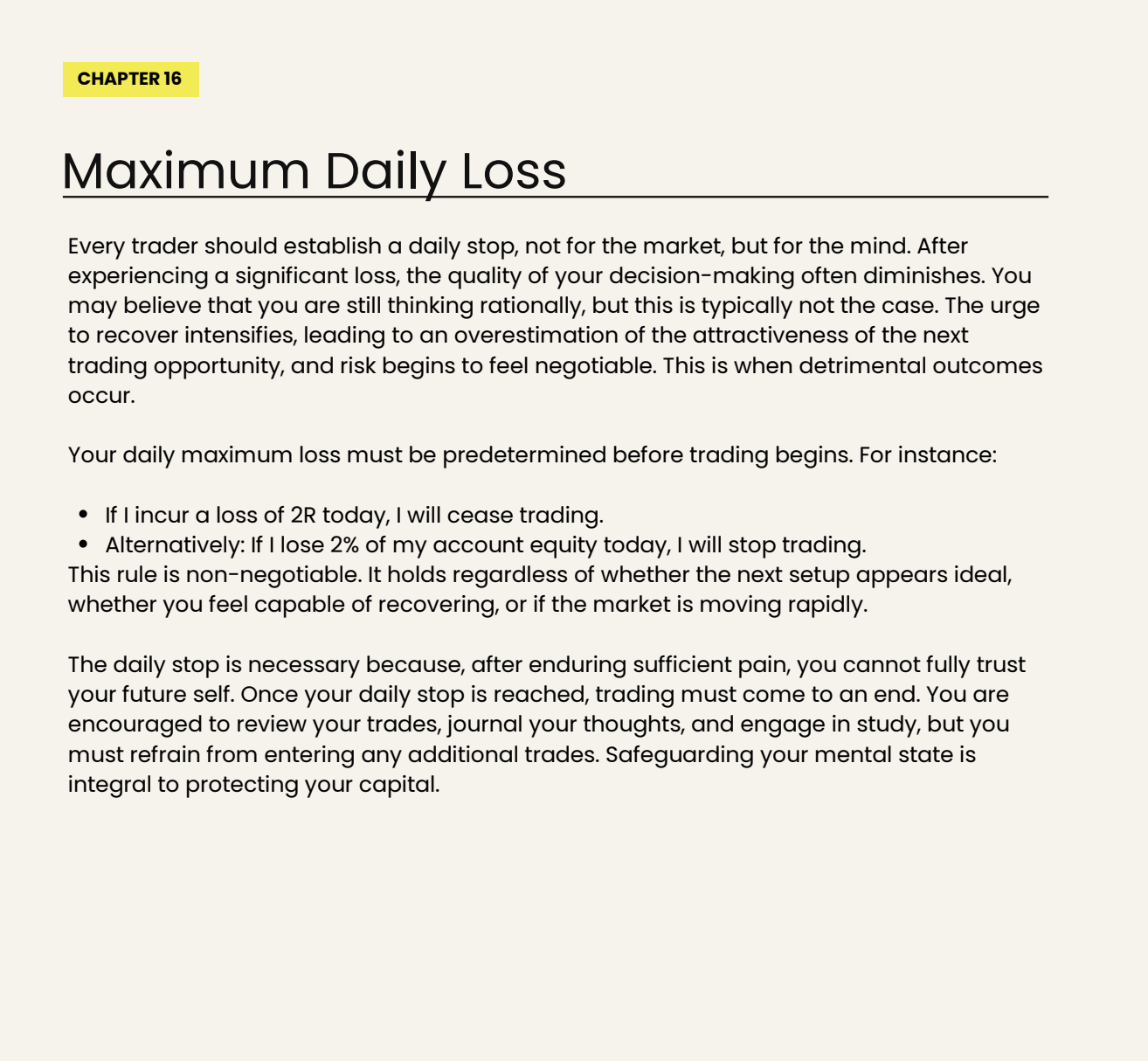
How to Stop Revenge Trading
Use predefined circuit breakers to interrupt revenge trading after a loss.
Read guide →18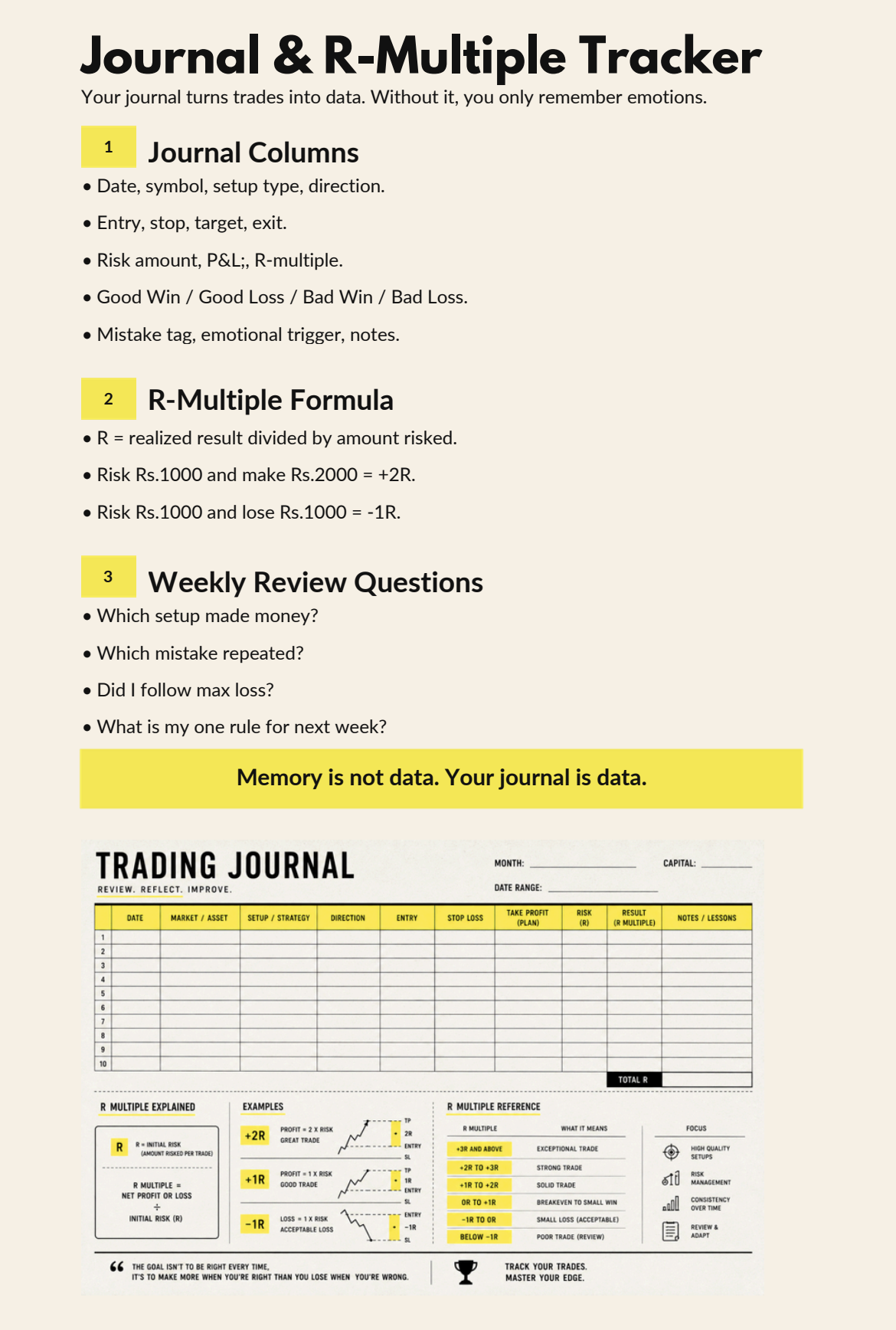
Maximum Daily Loss Rule Explained
Learn how a daily loss limit protects capital and decision quality.
Read guide →19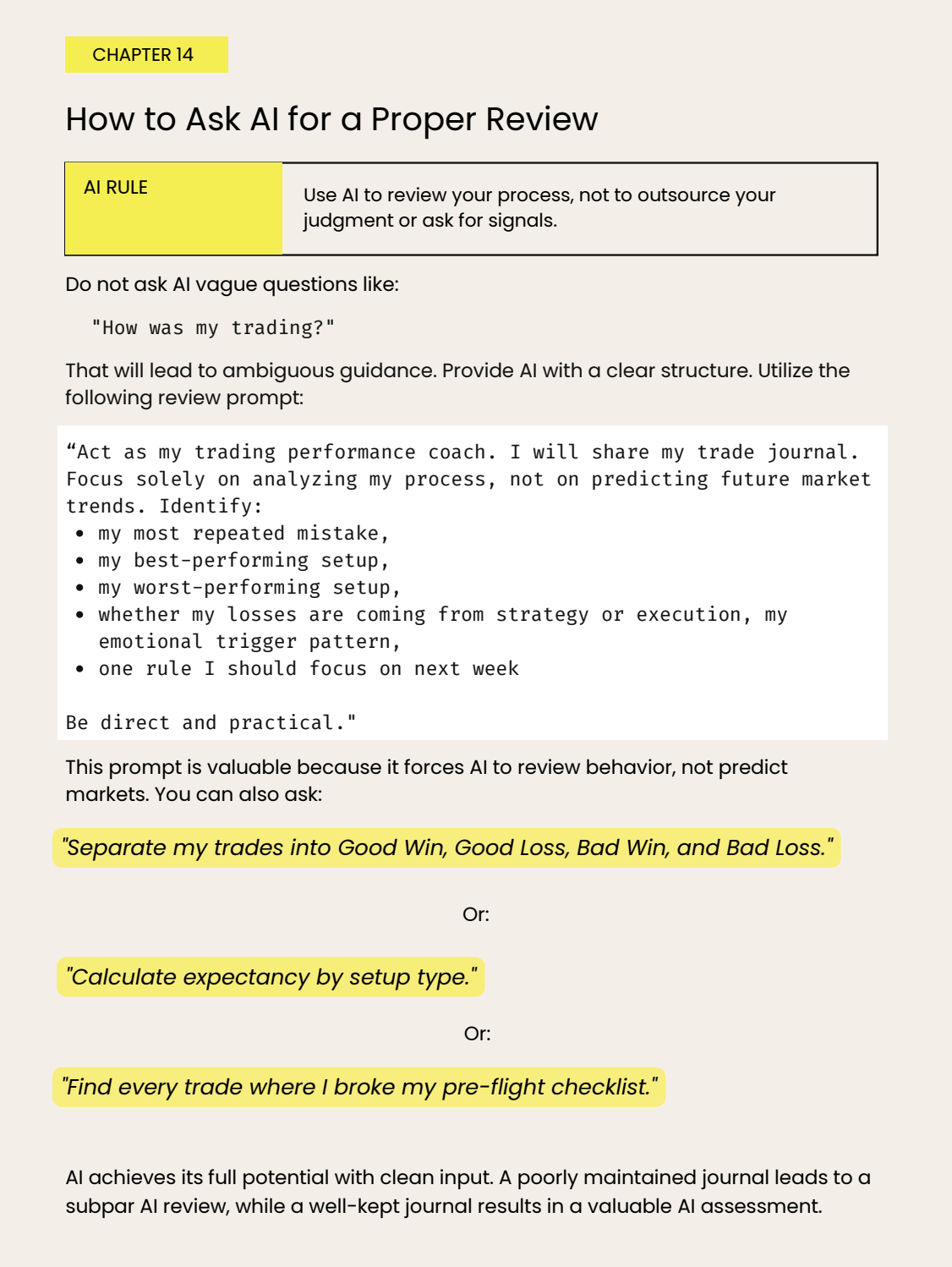
Free Trading Journal: What Should You Record?
Build a useful trading journal with setups, risk, R results, screenshots, and lessons.
Read guide →20How to Use AI to Review Your Trading Journal
Use AI as a feedback coach to find repeated mistakes and patterns in your trading journal.
Read guide →